Inside the World of UK TV Repair: How to Choose the Right Engineer
By James Whitmore · 2026-04-26 · 7 min read

Television repair is, in 2026, one of those small British trades that has quietly outlasted its predicted decline. There are independent engineers operating in almost every UK town, from London to the Scottish Highlands, working on a steady stream of home callouts in living rooms, conservatories, holiday cottages and care homes. The trade is not large. It is not glamorous. But it works, and it works largely because households who get good service tell other households.
The point of this piece is to give you a useful shortlist of things to look for when you are choosing an engineer for the first time — particularly if you have moved house, are dealing with an unfamiliar fault, or have been let down by a previous callout and want to do it properly this time.
The first signal: how the engineer answers the phone
Television engineers do not need to be excellent on the phone, but the call should feel competent. A reputable engineer asks specific questions early: what model the set is, how old it is, what symptom you are seeing, when the symptom first appeared, and what the set was doing immediately before it failed. They do this not because the answers tell them the fault — they often do not — but because the questions tell them what part to bring.
An engineer who quotes a fixed price over the phone without any of these questions is usually quoting their average callout fee, not the fault. There is nothing dishonest about this in itself, but you should expect the actual quote to differ once they have seen the set.
The second signal: the membership badges
A useful and slightly under-used filter is whether the engineer holds membership with one of the UK trade bodies — the Confederation of Aerial Industries (CAI) is the largest for installation and signal-side work; the British Standards Institute's PAS 2030 covers some electrical home work. Membership is voluntary and not every good engineer carries it, but those who do have, by definition, signed up to a code of practice that includes written quotes, transparent pricing and a complaints process.
The badges are particularly worth looking for if your fault involves an aerial, a satellite installation, or the wiring inside a multi-room system. For panel-side work in a single set, an experienced independent engineer without trade-body membership may be just as good or better.
The third signal: the reviews you can actually read
UK engineers in 2026 typically have a small online presence — a one-page website, a Google Business listing, sometimes a Trustpilot or Checkatrade profile. You do not need the listing to be slick. You do need to be able to read several actual reviews, in real prose, from named customers. Be careful with profiles that have only five-star reviews of two sentences each; an engineer with thirty years of trade is much more likely to have an honest mixture of warm, neutral and mildly grumpy customers.
The most useful reviews to read are the ones that mention specific behaviours: arriving on time, leaving the room tidy, calling back when promised, explaining the fault patiently to an older relative, charging less than expected, charging exactly what was quoted. The five-star reviews that say only "great work" are less informative than the four-star reviews that say "had to come back a second time but did so without charging extra".
The fourth signal: what they say about old sets
This is, in my view, the single most useful test. Ask the engineer briefly — even before you book — what they think about repairing older televisions. A reputable engineer will give you a balanced answer. Yes, they repair older sets. Yes, some are worth repairing and some are not. Yes, they will be honest about the difference when they see the set in question.
An engineer who is enthusiastic about repairing any television, however old, is selling labour. An engineer who is reluctant to repair anything older than a few years is selling new televisions on the side. Neither is necessarily a bad person, but neither is what you want for an independent assessment of your set.
The fifth signal: their answer about warranty
A reputable independent repair carries a warranty on parts and on labour. The standard in the UK is between three months and one year on the parts the engineer has fitted, and between one month and three months on the labour itself. Some engineers offer more; some offer slightly less. The number is less important than the clarity. If you ask "what warranty do you give on your work?" and the answer is specific — "three months on the parts, one month on the labour, no quibbles" — you are dealing with a professional. If the answer is vague, you are dealing with someone who has not thought about it.
The sixth signal: how the visit ends
You will know whether you have chosen well within the first hour of the engineer being in your home. The signs are quiet and consistent. They take their shoes off at the door, or change into clean ones. They lay down a small mat before opening the set. They narrate what they are finding as they work. They quote in writing before fitting anything. They show you the failed part if you want to see it. They leave the cabinet straight and the room as they found it.
These are not difficult standards. The British television engineers who meet them are the ones who acquire long-running, word-of-mouth practices in the towns where they work, and the ones whose names get passed around groups of neighbours when something next breaks.
A practical workflow
If you are starting from a cold standing position — no previous engineer, no recommendation — here is the workflow most British households we have spoken to follow with success:
- Search online for "television repair near [your town]" and "TV repair engineer [your town]". Read the first three or four results in full.
- Look at the Google Business reviews. Filter mentally for the kind of customer language above.
- Phone the two best-looking engineers. Spend three minutes on the phone with each. Notice which one asks better diagnostic questions.
- Book the one you preferred. Note the time slot, the call-out fee, and the warranty offered.
In the great majority of cases you will end up with a competent engineer, a fixed television and a small piece of useful local knowledge for next time something breaks. The trade rewards households who do this homework. It is small effort for a quietly large dividend.
Editorial standards: this article reflects general consumer guidance for UK readers. We do not provide medical, legal, or financial advice. For specific matters please consult a qualified professional.
Related reading
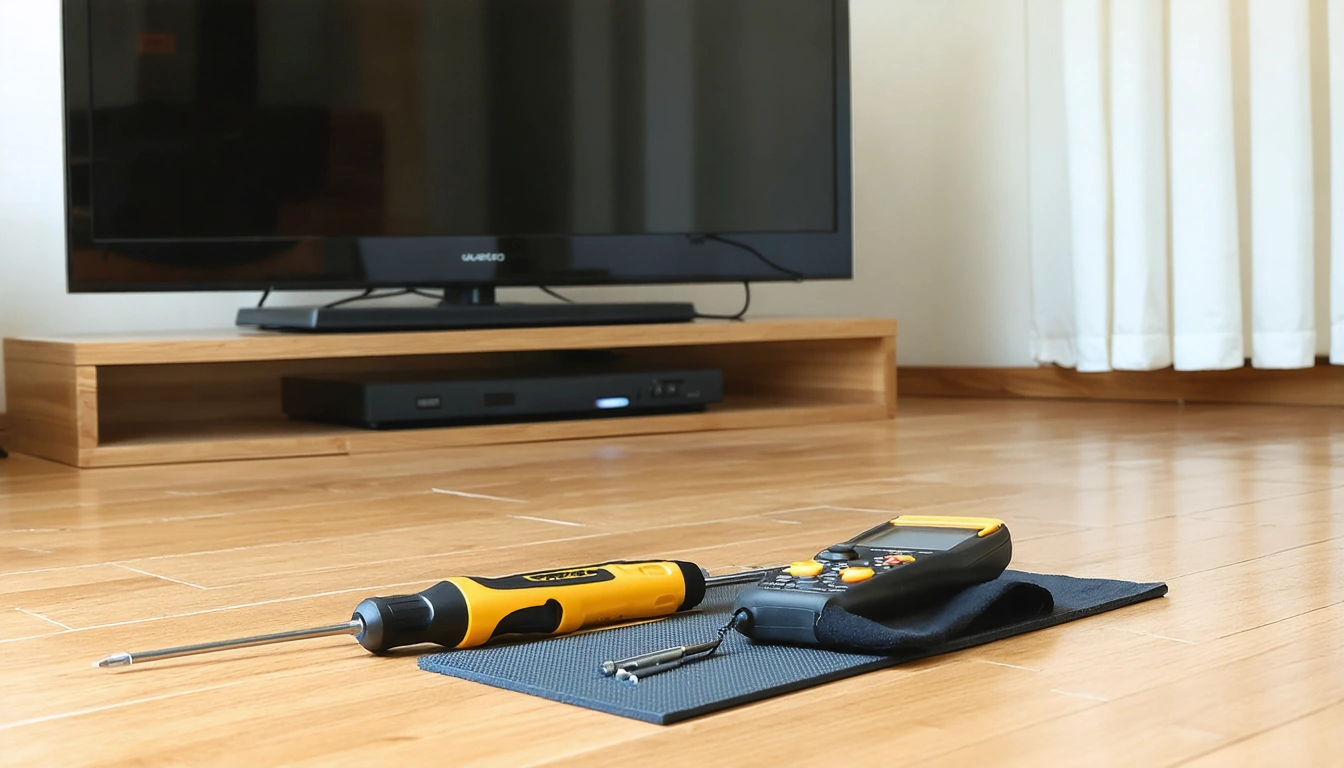 Tech
TechWhat a Reputable TV Engineer Actually Does in Your Home
A walk-through of what to expect when a UK television engineer visits — from the doorstep to the cabinet being closed.
 Tech
TechFive Common TV Faults and What They Tell You
The faults UK households actually see most often, what each one usually means, and which ones are worth a phone call this week.
 Home
HomeRepair or Replace? A Plain-English Calculator for British Households
When a television fault is worth fixing and when it is not, written for the UK living room without industry jargon or exact prices.