What a Reputable TV Engineer Actually Does in Your Home
By James Whitmore · 2026-04-18 · 7 min read
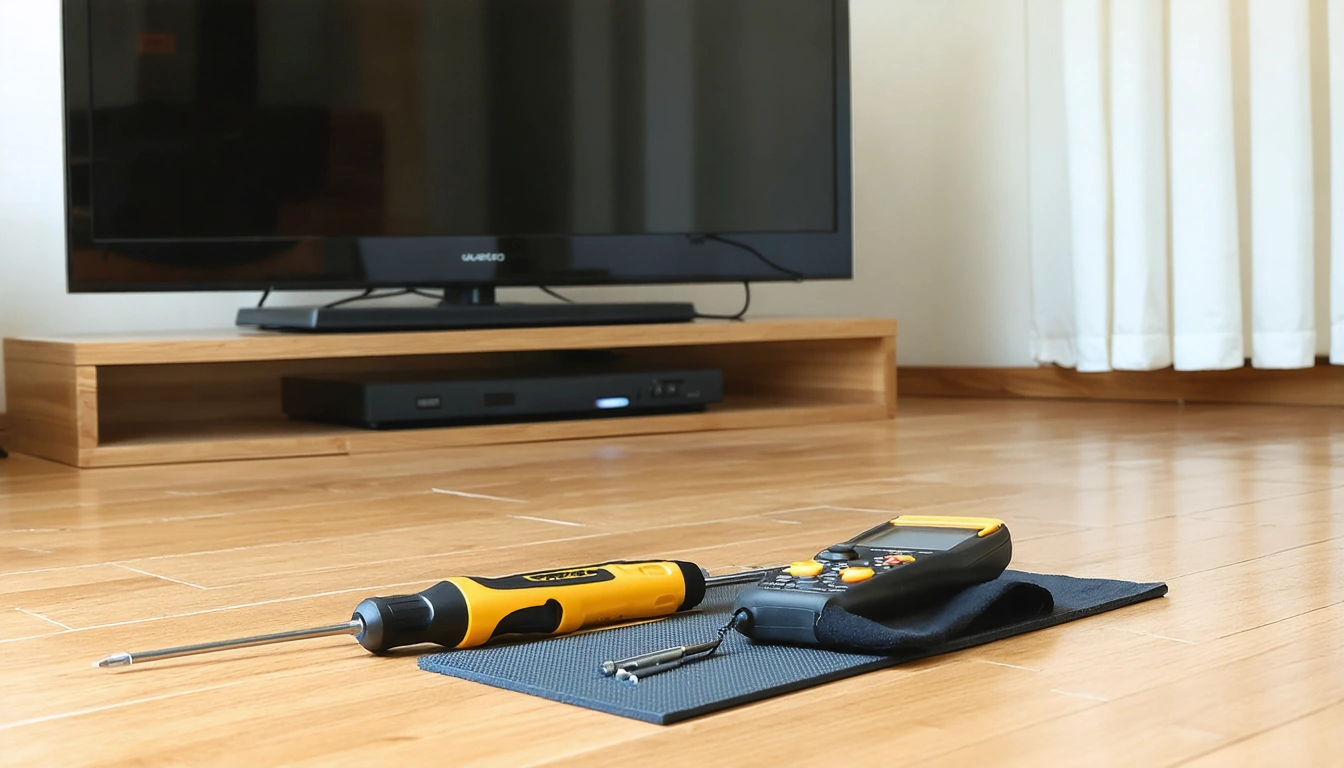
If you have not had a television engineer in the house before, the booking can feel slightly opaque. You make the call, you describe what happened ("it just went off in the middle of…"), you agree a window, and then a person you have never met arrives with a small case of tools and quietly takes the back off the set in your living room. What follows ought to be entirely undramatic. This piece walks through the eight things a competent UK engineer will do during a typical home visit, so that you know what to look for and what to ask about.
1. They arrive with the right tools, not a van of them
A working television engineer brings a small kit — a multimeter, a magnetic-tip screwdriver set, an anti-static mat, a spare set of common capacitors, a few common boards for the major brands, and a torch. They do not need to bring a vanful of stock. If the engineer at your door is unloading a large quantity of equipment, ask politely whether the job warrants it; in most home visits it does not.
2. They look at the set before they touch it
A good engineer spends at least a minute looking at the television exactly as you have been using it. They watch how it switches on (or fails to). They listen for relay clicks. They check the standby indicator. They press the power button on the set itself, not just on the remote, to confirm what is and is not responding. This minute is part of the diagnosis. An engineer who immediately starts unscrewing the back without this first observation is not doing it properly.
3. They ask you what you noticed first
The single most useful piece of diagnostic information is what the household saw or heard immediately before the fault began. A good engineer will ask. Was there a flicker? A buzz? A particular sound from the room (a thunderclap, the heating coming on, the kettle being switched on)? A specific programme on screen, or a particular streaming app open? They are listening for clues to the upstream cause — a brief mains spike, a power-board failure, a signal-source issue — not gathering complaints.
4. They isolate the set from the mains before opening it
Before any panel comes off, a competent engineer unplugs the television from the wall and waits a short interval for the power supplies inside the set to discharge. Modern TVs hold residual charge on their capacitors for a surprising length of time. The wait is brief but it is not optional, and an engineer who skips it is not someone you want to invite back.
5. They explain what they are seeing as they go
You should not need to ask twice what the engineer has found. The reputable ones narrate the diagnosis quietly as they work: "the power board is fine — capacitors all look clean", "the T-Con board has a small burn mark here, we'll swap it", "the panel itself looks healthy from the back". You do not need to follow the technical detail. You only need to know that the engineer is willing to share it.
If the engineer is silent throughout the inspection and then quotes a number at the end without explanation, ask for a walk-through. A good one will be happy to provide it.
6. They tell you when a repair is not worth doing
This is, in many ways, the test. A genuinely reputable engineer will sometimes tell you not to repair the set — that the panel has aged out, or that the symptom in front of you is the leading edge of a larger fault that will reappear within months. They will say so even though it costs them the job. If you call out an engineer and they always have a fixable repair, however old the set, that is information about the engineer rather than about your television.
7. They quote in writing before they fit any part
A repair callout should produce a written estimate before any part is replaced. In a home visit this can be informal — a line in a notebook, a quick text from the engineer's phone — but it should be specific: the part to be replaced, the labour, and an indication of warranty on the work. Verbal quotes are usually given in good faith, but the written version is the one you have to refer to if a question arises afterwards.
8. They leave the cabinet tidy and the room as they found it
A repaired television is back in its place, the cables seated, the back panel screwed in evenly, the floor swept of any small offcut of plastic or insulation. The engineer takes the failed part away with them, or shows it to you if you would like to see it. The whole visit, in a typical home call, lasts between forty-five minutes and an hour and a half — much less than the stress of the breakdown that caused the booking.
A few honest signs of a bad visit
Most UK engineers operating today are good at what they do. The trade has small margins and is largely held together by reputation, particularly in towns where word travels quickly. But there are a few signs that something is off:
- Pressure to fit additional parts that were not part of the original symptom.
- Refusal to give a written quote before fitting anything.
- A long argument about the warranty on the new part.
- Damage to the cabinet, the wall behind the TV, or the floor, that is not acknowledged.
None of these is common. All are, however, worth ending the visit politely and trying a different engineer next time.
After the engineer has gone
If the repair is successful, the picture should be back to where it was before the fault began — no faint banding, no delayed wake-up, no shifted colour. Watch the set for an evening, and then again the following weekend. If anything is not quite right, call the engineer back; reputable ones offer a short return window on their work.
The thing that surprises most British households, after their first repair callout, is how undramatic the whole exercise turned out to be. The set was off for a few days; an engineer came; the set is on again. A small piece of household craft, quietly carried out.
Editorial standards: this article reflects general consumer guidance for UK readers. We do not provide medical, legal, or financial advice. For specific matters please consult a qualified professional.
Related reading
 Tech
TechHow to Read the Signs Before Your TV Quits Entirely
Six quiet symptoms that a British living-room television tends to show in the weeks before it fails, and what they usually mean.
 Tech
TechInside the World of UK TV Repair: How to Choose the Right Engineer
What to look for when choosing a television repair engineer in the United Kingdom — qualifications, reputation, and the small honest signs.
 Home
HomeRepair or Replace? A Plain-English Calculator for British Households
When a television fault is worth fixing and when it is not, written for the UK living room without industry jargon or exact prices.