When the Screen Dies Mid-Sentence: A Short History of British Living-Room Drama
By Maya Patel · 2026-04-12 · 8 min read
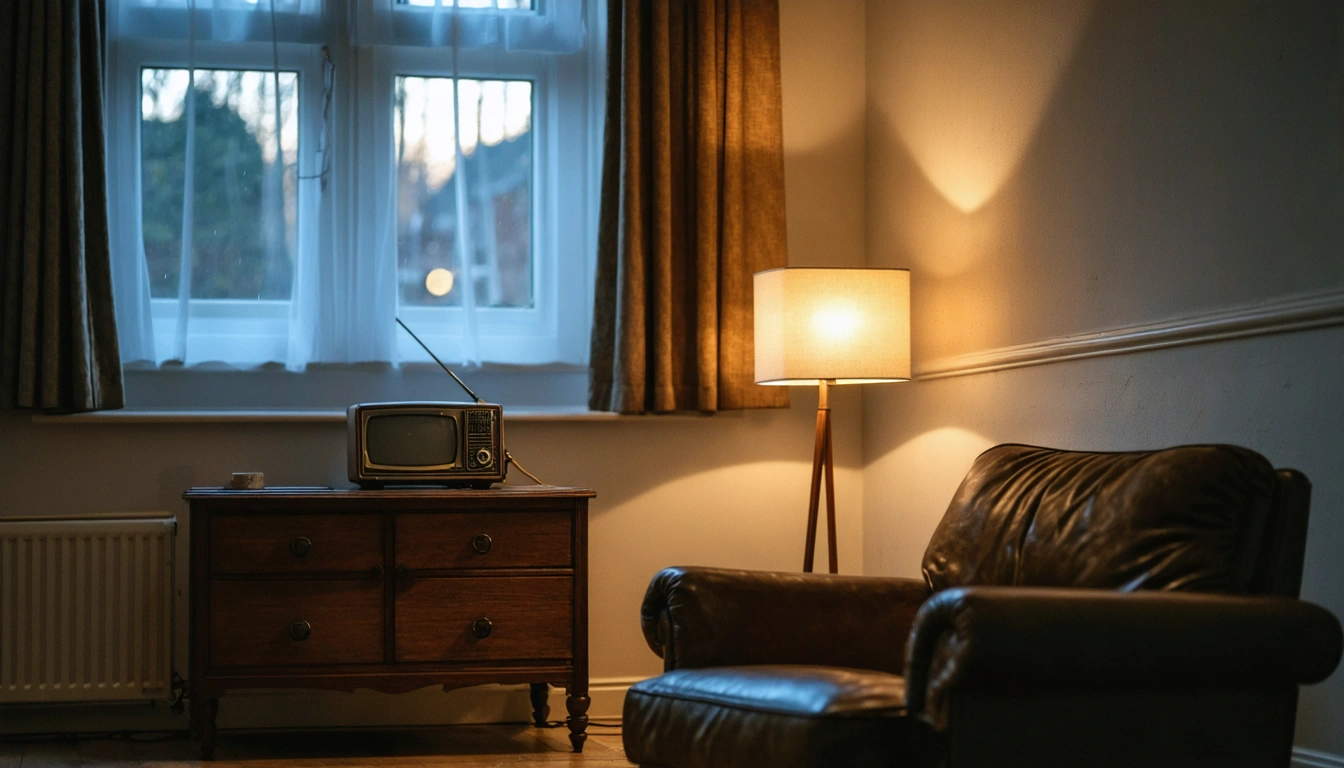
There is a particular British silence that follows a television going off in the middle of something important — somewhere between disbelief and the half-formed sentence of "did that just…". A lull on the sofa, a quiet on the group chat, then a slow rising hum: Britain buzzing after TV blunder, the way the country has always done when a screen lets it down at exactly the wrong second. We have made an entire small art of it.
When the Picture Goes
The set in the corner is supposed to be the easy part of the evening. The kettle complains, the boiler clicks, the washing machine pulls another cycle out of itself; the television, in most British homes, simply works. Until the moment it does not. And then everything gathers around it, the same way our grandparents gathered around radios when the news mattered and our parents gathered around colour sets to watch a thing they would otherwise have only read about. The screen is the most stubbornly social object in the house. When it fails, the failure is communal.
The Five Faces of a Screen Failure
For all the variety, most British screen failures fall into a handful of recognisable shapes. Anyone who has worked with televisions long enough — engineer, retailer, broadcast technician — will tell you the same: the symptoms repeat themselves with the regularity of weather.
The slow fade. A picture that arrives a little less bright every week, until one Sunday afternoon you realise you have been compensating for it for months. The colour has flattened. Skin tones look like illustrations. You notice it most during a familiar programme — a quiz format that has not changed its set in years, but suddenly looks lit by a different lamp.
The sudden stop. Mid-sentence, mid-goal, mid-confession on a reality show, the picture and sound drop together and the screen returns to a flat blue, or a black so total it pulls the room with it. Some sets recover after a polite pause. Others do not.
The pixel rebellion. A small but expanding mosaic of dead or stuck dots, usually starting in the upper-right, occasionally drifting toward the centre as if it had purpose. Modern OLED and LCD panels can survive this for years, but it tends to get worse around the corners where the bezel meets the panel and where heat builds quietly over an evening.
The signal stutter. A specifically modern disaster. The picture freezes into one half-frame; sound continues for two beats; sound stops. The whole thing then restarts on its own as though nothing has happened. The cause is rarely the television itself but somewhere upstream — the aerial, the box, the broadband, the streaming app — and yet the screen takes the blame because it is the part we look at.
The dignified death. A set that simply will not switch on one morning, with no warning the night before. No flicker, no clack of relay, no glow behind the panel. Often a power-board capacitor, often quite repairable, but felt at the moment of discovery like the loss of something domestic — closer to the boiler giving up than to a piece of consumer electronics.
Why It Always Happens at the Worst Moment
The cruellest law of British screens is that they understand timing. They fail on a final-of-something Sunday. They fail in the four minutes between the kettle going on and the second half starting. They fail when an older relative has settled in for an address — a royal address, a sporting decider, a long-trailed documentary — and not before.
There is, in fairness, a reason for this beyond cosmic mischief. The hours when a set is most likely to falter are the hours when it has been on the longest in a single sitting: warm power supplies, fans labouring against dust, panels driven near peak brightness because the room is bright. The British weekend afternoon — curtains half-drawn, low spring sun, two-and-a-half-hour programme — is a perfect storm for thermal stress on a screen that has, until this point, looked perfectly content.
The other reason is simply that nothing else competes for attention in those minutes. A washing machine could grind to a halt at 11 a.m. on a Tuesday and you might not notice for an hour. A fridge could lose temperature overnight and you would only know from a soft warm pull on the cucumbers in the morning. When a screen fails, an entire room understands it instantly. The household knows. The neighbour two doors down knows, eventually, because someone will tell them about it on Wednesday.
We forgive a lot of household objects when they break. The television gets a different kind of attention because we have, over generations, learned to mark hours by it. The week is shaped, still, by the rhythm of what is on. When the screen quietly removes itself from that rhythm, the rhythm notices.
The best stories about a broken television are never really about the television. They are about the room around it.
This is part of why the broken-screen story is one of the small recurring British narratives — handed across pubs, exchanged in waiting rooms, posted with shared, knowing eye-rolls. The set is a witness to ordinary life, and when the witness goes quiet, the life around it suddenly has something to say.
From Static to Stability
What links every screen failure above is the moment after it — the brief, slightly comic interval when the household tries to decide what to do. Tap the side. Unplug. Replug. Wait. Search the back of the cabinet for the original remote, which has not been used in two years. Look up the model number. Search the model number. Find a forum from 2019 in which someone reported the same fault and was sent a part. Wonder whether to call someone.
It is at exactly this moment that the British householder rediscovers something quiet and easy to forget: that television repair, like boiler repair and locksmithing and shoe-mending, is still a working craft. It has not been replaced by an app. It has not been migrated to a chatbot. It is done in person, by people, in living rooms not unlike the one with the silent screen.
And it is largely done well. The good engineers in this country travel light, work neatly, charge clearly, and leave the cabinet polished when they leave. They explain what failed and why. They tell you when something is not worth fixing and when it is. They restore the room to its own rhythm, often within an hour.
Finding Someone Who Can Fix It
The point of writing any of this down is not to celebrate the breakdown but to make the next part — the bit that begins after the silence — feel a little less like a problem.
If the screen in your sitting room has slowed, frozen, or quietly stopped, the next step is almost always smaller than it feels in the moment. A short conversation, a visit, a part replaced, the room back to itself by the evening. Most British households do not need to live with a half-working television for more than a few days.
Editorial standards: this article reflects general consumer guidance for UK readers. We do not provide medical, legal, or financial advice. For specific matters please consult a qualified professional.
Related reading
 Tech
TechHow to Read the Signs Before Your TV Quits Entirely
Six quiet symptoms that a British living-room television tends to show in the weeks before it fails, and what they usually mean.
 Tech
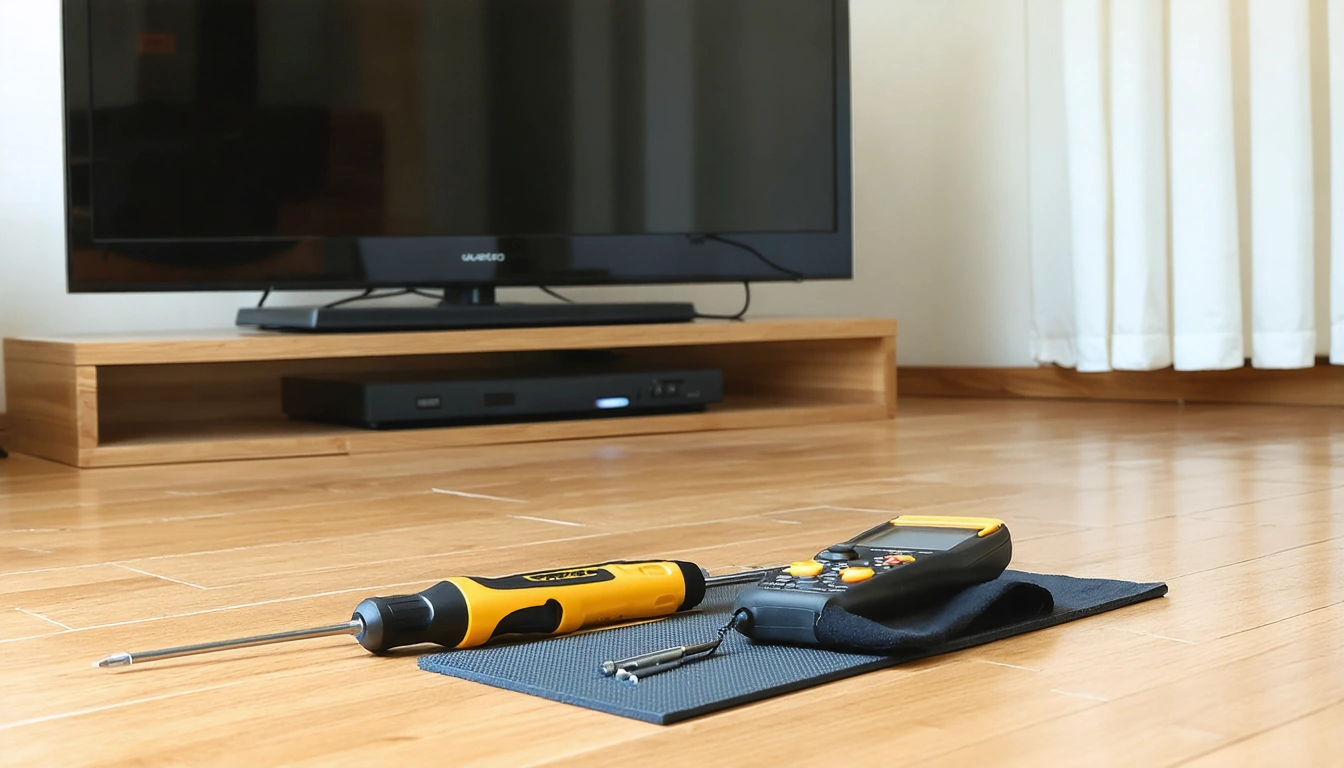
TechWhat a Reputable TV Engineer Actually Does in Your Home
A walk-through of what to expect when a UK television engineer visits — from the doorstep to the cabinet being closed.
 Home
HomeRepair or Replace? A Plain-English Calculator for British Households
When a television fault is worth fixing and when it is not, written for the UK living room without industry jargon or exact prices.