Why the Television Cabinet Still Matters in a Modern British Home
By Sophie Clarke · 2026-03-15 · 6 min read
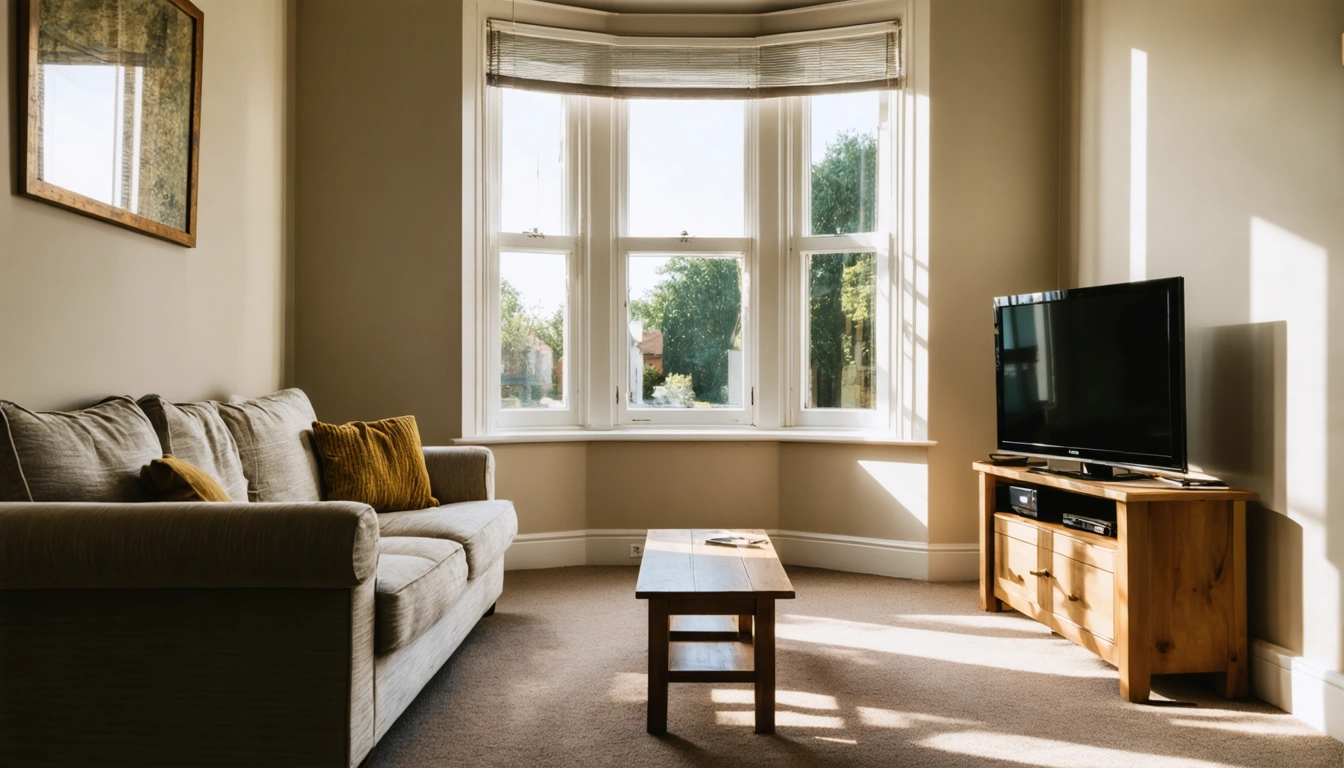
The most interesting thing about a British living room is rarely the television itself. It is the small set of arrangements around it: the height of the cabinet, the angle of the sofa, the way the light falls in the late afternoon, the cable run behind the radiator. These choices are made gradually, almost without thinking, and they shape how the household uses the screen in ways nobody would describe in those terms. They also, quietly, decide how long the set will last.
The cabinet is not just storage
For most of the last twenty years, the British television cabinet has been treated as a piece of background furniture — somewhere to put the box. Modern households often skip the cabinet entirely, wall-mounting the screen with a slim shelf below for the streaming box and the soundbar.
This is, for a minority of homes, the right answer. For the majority, the older approach — a low, solid cabinet at sitting-eye-level with the television resting on its top — is quietly the better one. Wall-mounted sets are exposed to more thermal stress (heat rises into them from radiators below), more sound reverberation (a wall behind the panel acts as a drum), and more cleaning awkwardness (the gap between the panel and the wall traps dust quickly). A cabinet, by contrast, sits at a viewing-friendly height, ventilates from below, and provides a small natural buffer for cables, remotes and the small detritus of an evening's viewing.
If you are arranging a living room from scratch, the question is not whether to mount or to cabinet. It is what cabinet, at what height, with what depth, and with what ventilation behind it.
Distance and angle: the unspoken comfort
A surprising amount of UK eye strain comes from sitting either too close to a screen or at an awkward angle to it. The rough working rule used by interior planners is straightforward: the viewing distance should be approximately one-and-a-half times the diagonal of the screen, with the screen centre approximately at eye level when you are seated upright. For a typical UK living-room screen of around fifty inches, that places the sofa about six feet away with the screen centre roughly forty inches from the floor.
Few rooms in the UK accommodate this perfectly. Most British living rooms are slightly long and narrow, with the sofa pushed against one wall and the screen against the other. The arrangement is workable but rarely ideal. Small adjustments — turning the sofa five or ten degrees, raising the cabinet by an inch or two, switching from a chunky lamp to a slimmer one beside the screen — make a meaningful difference to how the room feels in the evening, even though nobody quite notices the change.
Light: the part most rooms get wrong
A television in a British living room competes with daylight from one or two directions and with lamp light from another two or three. The most common mistake is to place a strong table lamp directly behind the sofa, where it casts light onto the screen from the worst possible angle and overrides the panel's natural contrast. The second most common mistake is to leave the screen directly opposite a south-facing window, where the late-afternoon sun strikes the panel through the most reflective hours of the day.
The simple working principle: light should come from beside the screen, not from across the room and not from directly above. A floor lamp to one side of the cabinet, switched on in the evening, is the easiest and cheapest improvement most British households can make to how their television looks at six in the evening.
Cables: the part that does not show but matters most
The single most preventable cause of television fault we have encountered, in conversation with engineers across the country, is poor cable management. Power leads kinked behind a radiator. HDMI cables under tension where the sofa has been pushed against the wall. Aerial leads pinched into a tight U-bend behind a cabinet leg. Each of these can introduce intermittent faults that look, in the living room, like a problem with the television.
The fix is not expensive. A short trip to a hardware shop for two cable tidies, an angled HDMI adapter, and a few small Velcro ties will make the entire cabling system more reliable for years. The improvement is invisible from the sofa but immediate in the rate at which small faults disappear.
A short word about ventilation
Most British televisions live in homes that are warmer than the panels were designed for. Central heating, draught-proofing and triple glazing have collectively raised the average UK living-room temperature by about one and a half degrees over the last two decades, and televisions placed close to radiators or in cabinets with closed backs are working harder than they were built to.
The solution is small: leave four or five centimetres of clear air behind the set, and avoid placing the screen directly above or beside a radiator if possible. If the cabinet is closed-backed, drill or buy a model with rear ventilation grilles. Engineers will tell you, when they have seen enough sets, that the longest-lived televisions in British homes are almost always the ones in well-ventilated cabinets in moderately heated rooms.
Drawing it all together
The arrangement of a British living room around its television is, in the end, a small accumulation of practical decisions: the cabinet height, the distance from the sofa, the angle of the lamps, the run of the cables, the air behind the panel. None of these is dramatic on its own. Taken together, they decide whether the set lasts seven years or eleven; whether the picture looks bright in the evening or flat; whether the room feels organised or slightly improvised.
Most households arrive at a reasonable arrangement by accident. A little deliberate thought — particularly when buying a new set, moving house, or replacing a sofa — turns "reasonable" into "well thought out", and a well thought-out living room is a quietly better place to spend an evening.
Editorial standards: this article reflects general consumer guidance for UK readers. We do not provide medical, legal, or financial advice. For specific matters please consult a qualified professional.
Related reading
 Home
HomeRepair or Replace? A Plain-English Calculator for British Households
When a television fault is worth fixing and when it is not, written for the UK living room without industry jargon or exact prices.
 Tech
TechWhat a Reputable TV Engineer Actually Does in Your Home
A walk-through of what to expect when a UK television engineer visits — from the doorstep to the cabinet being closed.
 Lifestyle
The Quiet Skill of Keeping Old Tech Alive in 2026
Why the small British craft of fixing televisions, kettles and printers still matters — and what it costs us when it goes.