British Sitcoms That Outlived Their Decade — And Why
By James Whitmore · 2026-04-15 · 6 min read

The British half-hour sitcom is one of those small, persistent forms of television that occasionally outgrows the decade it was made for. A handful of series, written in their moment and reflecting it, somehow continue to find an audience twenty, thirty, forty years later. They are repeated on the schedule, streamed on demand, and passed down through families in a way that almost no other broadcast format manages. This piece is about what they tend to have in common — not in order to grade them, but to notice the small structural choices that allow a half-hour comedy to age unusually well.
1. The setting is small enough to remember
Long-running British sitcoms are almost all built around a small, recognisable physical space. A pub. A flat. A shop. A barracks. A boarding house. A back garden. A particular bench in a particular cafe. The setting is constrained, sometimes deliberately claustrophobic, and the viewer can map it in their head within the first episode. This matters more than it sounds, because the laugh in a sitcom often depends on the audience knowing the geography — knowing that the kitchen is through there, that the front door always sticks, that this is the chair the character will sit in.
A sitcom built around a constantly shifting set rarely runs for long. A sitcom built around four square metres of familiar furniture often does.
2. The cast is small and unevenly matched
The long-runners tend to have a core cast of between three and six characters, with one or two stronger comic personalities offset by one or two quieter ones. The strong personalities carry the visible jokes; the quieter characters provide the contrast that makes the jokes land. Sitcoms with a flat ensemble cast — everyone equally funny, everyone equally loud — tend to wear out quickly, because the audience has no rest from the volume.
The British sitcoms that age best are usually built around what writers call "the asymmetry of company" — characters who would not, in life, choose each other but who, by some structural necessity of the setting, cannot leave.
3. The writing is tight in the half-hour
A half-hour British sitcom episode is, after advert breaks, between twenty-two and twenty-five minutes of actual screen time. The long-runners use that interval extremely economically. The setup is established within ninety seconds; the complication develops across the middle ten minutes; the resolution falls inside the closing five. There is almost no slack. Watch any of the British sitcom canon back-to-back and you will notice that the pacing is unusually disciplined.
This discipline survives time. A loosely paced sitcom from the early 1980s feels its age now. A tightly paced sitcom from the same period reads, on first viewing, as perhaps three or four years old.
4. The premise carries social tension lightly
The British sitcoms that age unusually well almost all rest on a quiet social tension — class, region, generation, military rank, or some combination — but they wear the tension lightly. They are not, strictly speaking, "about" the class system or the regional accent. They are about a small group of characters who happen to embody them, written by people who knew the tension from the inside. This makes the comedy specific without making it preachy, and specificity is, almost always, what allows a comedy to keep working forty years later.
A sitcom that tries explicitly to address its social tension rarely outlives it. A sitcom that lets the tension breathe through the characters, undeclared, often does.
5. The performances are studied rather than spontaneous
A small but consistent feature of the long-running British sitcoms is that the lead performances are highly worked. The timing of each line, each pause, each look across a table is rehearsed to within a beat. This is, in the moment, almost invisible — the performances feel natural. On second viewing the precision becomes obvious. On tenth viewing the precision is the pleasure.
A British sitcom built around improvised or loosely directed performances rarely lasts. Improvisation can be brilliant in the moment but is often less durable across decades, because the energy of the original room is harder to recover on re-watch.
6. The episodes are not too connected
The most rewatchable British sitcoms have a loose continuity. Each half-hour stands more or less on its own. There may be a long-running joke or relationship across the series, but the viewer can dip into a single episode without confusion. This matters for re-watching because it allows a household to pick up an episode on a wet Tuesday in November and follow it without needing to track three previous episodes of arc.
Sitcoms with tight serialised arcs — recent ones especially — are often excellent television but rarely become the long-running comfort viewing of British households. They are not built for that role.
7. The themes are quiet, repeated, and not novel
The long-runners are almost all built around quiet recurring themes — work, money, status, friendship, marriage, ageing — handled with neither pretension nor sentimentality. They do not chase the cultural conversation of their decade. They notice the small textures of British life and stage them slightly louder than reality. Forty years later the louder staging still works because the underlying themes have not changed.
A British sitcom that hooks itself to the cultural specifics of its moment — a particular politician, a fashion trend, a passing controversy — often feels older than it is. A British sitcom that hooks itself to the rent, the housemates, the boss and the bus stop usually feels younger.
Why this matters for the room
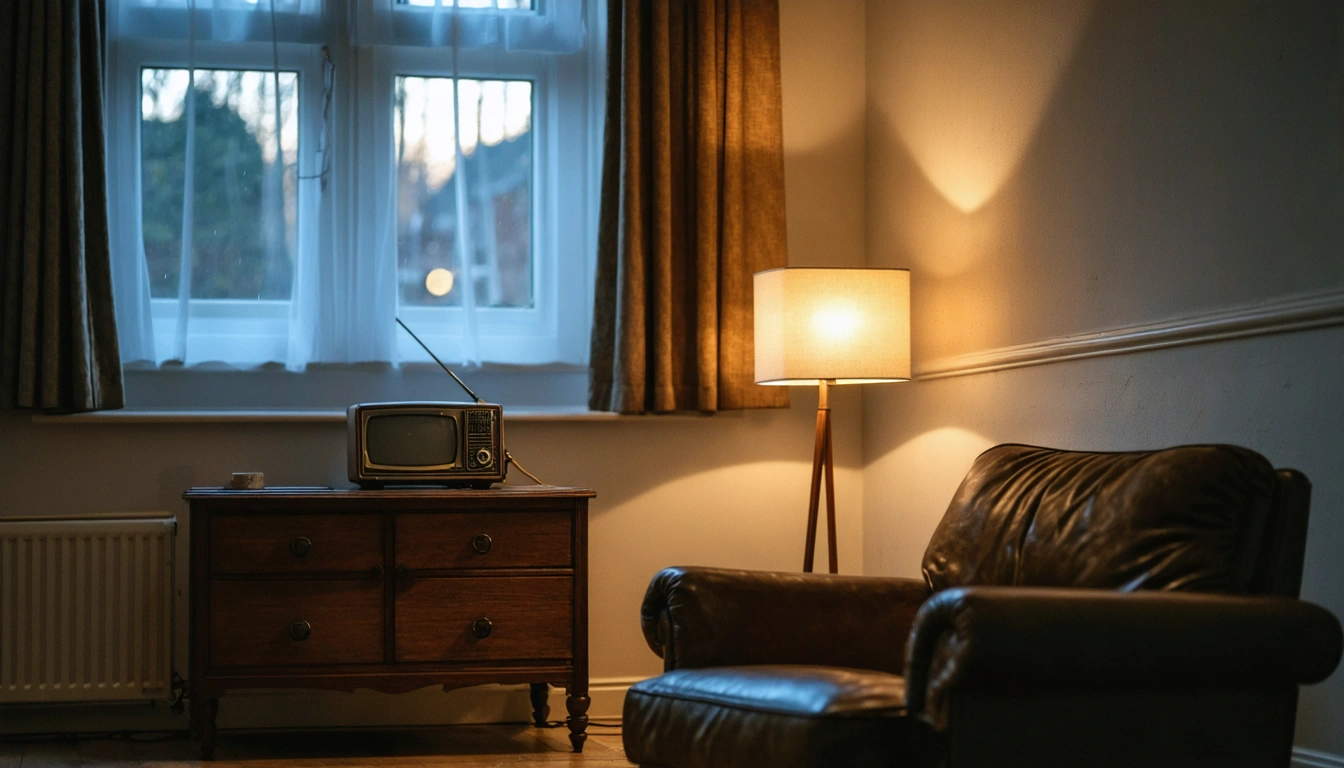
Half-hour comedy has, for two generations, been one of the small reliable goods of the British living-room evening. The shows that age well sit in the rotation of the household for decades. They are picked up, set aside, picked up again. They are part of the architecture of the room in the same way the lamp on the cabinet is, or the small mug for tea that nobody else is allowed to use.
It is worth noticing, occasionally, why some half-hours wear so unusually well — and what the small structural choices were that allowed them to.
Editorial standards: this article reflects general consumer guidance for UK readers. We do not provide medical, legal, or financial advice. For specific matters please consult a qualified professional.
Related reading
 Lifestyle
The Story Behind Britain's Quiet Love of Re-Watching
Why so many British households re-watch the same television programmes year after year, and what the habit says about the British evening.
 Culture
When the Screen Dies Mid-Sentence: A Short History of British Living-Room Drama
A quiet look at why British screens fail at the worst possible moment, and what it tells us about the small craft of repair.
 Lifestyle
The Quiet Skill of Keeping Old Tech Alive in 2026
Why the small British craft of fixing televisions, kettles and printers still matters — and what it costs us when it goes.